
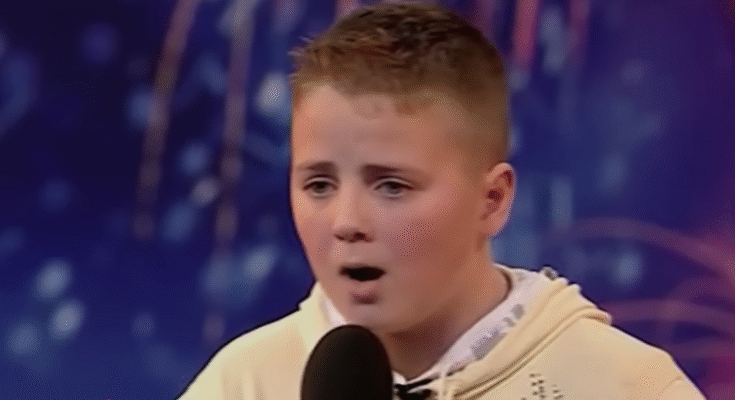
In 2008, a shy 13-year-old named Andrew Johnston stepped onto the Britain’s Got Talent stage — and into television history. The video may be wrapped in viral-style clickbait today, but the moment itself remains untouchable. No gimmicks, no theatrics. Just a nervous boy, a massive audience, and a silence that would soon say everything.
Before singing, Andrew quietly revealed the truth behind his smile. At school, he was bullied for loving music, mocked for his high voice, and made to feel like he didn’t belong. But instead of quitting, he chose something braver. He told the judges that no matter what people said, he “just carries on singing” — a line that instantly reframed the audition into something far deeper than a talent show moment.
Then came the first note. Andrew performed Pie Jesu, a piece written by Andrew Lloyd Webber and usually reserved for trained operatic professionals. What followed stunned the room. His voice — pure, delicate, almost unreal — floated through the theatre, silencing every whisper and expectation. The contrast between his timid presence and the power of his sound was jaw-dropping.
The judges were visibly shaken. Amanda Holden struggled to hold back tears, overwhelmed by both the voice and the story behind it. Even Simon Cowell, famous for brutal honesty, was left speechless before admitting Andrew was “better than he thinks he is” — a rare, gentle moment from the show’s toughest critic.
Backstage, the camera caught Andrew’s mother breaking down as the crowd of 2,500 rose to their feet in a thunderous standing ovation. In that instant, years of bullying collapsed under applause. The audition didn’t just launch a career — it became a reminder that quiet courage, when given a microphone, can echo forever.